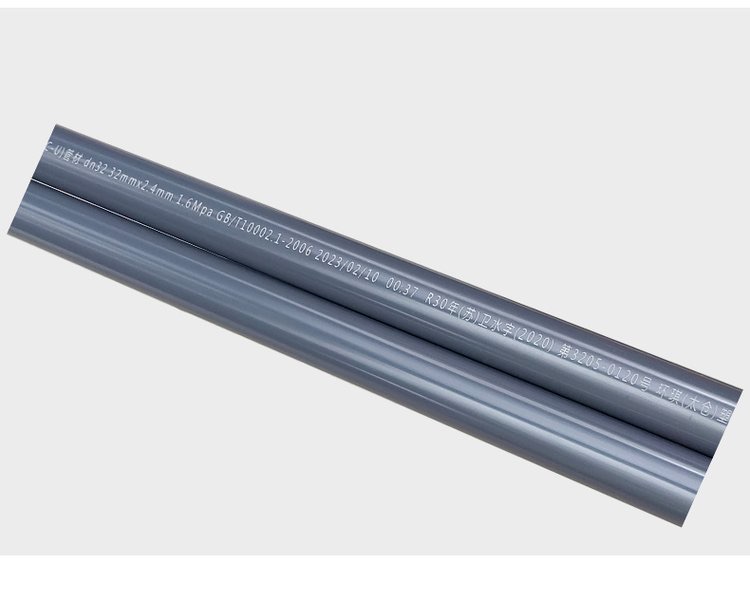
1.Under What Conditions Do PVC Pipes Freeze?
PVC pipes are widely used in drainage, water supply, sewage and electrical conduit systems for their lightweight, corrosion-resistant and cost-effective properties. Many users assume PVC pipes are immune to freezing damage, but in fact, PVC pipes will freeze, crack and burst under specific low-temperature conditions. Understanding the exact conditions that cause PVC pipe freezing is critical to preventing pipeline failures, costly repairs and project downtime.
2.Critical Temperature Threshold for PVC Pipe Freezing
The most basic condition for PVC pipe freezing is ambient and pipe surface temperature stably below 0°C (32°F). Pure water inside the pipe begins to freeze and expand at 0°C, and the expansion pressure will quickly damage the PVC pipe wall. Even short-term exposure to sub-zero temperatures can cause ice blockages; prolonged low temperatures below -5°C will lead to irreversible cracking, especially for thin-walled PVC-U pipes used in drainage systems.
It should be noted that PVC material itself becomes brittle at low temperatures, and its impact resistance drops sharply when the temperature is below 0°C. Even without complete freezing, brittle PVC pipes are easily damaged by minor pressure or vibration, greatly increasing the risk of rupture once ice forms inside.
3.Key Conditions That Cause PVC Pipes to Freeze
Freezing is not only caused by low temperature alone; the following conditions will greatly accelerate freezing and increase bursting risk:
3.1Uninsulated Exposed Installation
Outdoor walls, open trenches, unheated attics, garages, basements and buried pipelines above the local frost line are the highest-risk areas. Without foam insulation sleeves, waterproof insulation or thermal tape protection, PVC pipes directly contact cold air, and the temperature inside the pipe quickly drops to freezing point, forming ice blockages in a short time.
3.2 Stagnant Water Inside the Pipeline
Standing water is the core cause of PVC pipe freezing. Pipes that are unused for a long time, closed-end pipelines, dead-end branches, and low-point drainage pipes with accumulated water will freeze completely once the temperature drops below zero. Flowing water has a higher anti-freezing capacity, while completely static water will freeze and expand rapidly, breaking the pipe from the inside.
3. 3High Humidity and Cold Wind Convection
High-humidity environments, coastal cold winds, and strong air convection will accelerate heat loss on the pipe surface. Even if the temperature is slightly above 0°C, wind-chill effect can lower the actual pipe temperature to below freezing, causing unexpected freezing. This condition is extremely common in open industrial sites and northern outdoor projects.
3.4Improper Buried Depth and Poor Backfilling
Buried PVC pipes must be installed below the local annual frost line. If the buried depth is insufficient, or the backfill is not compacted with gaps, cold air will penetrate the soil and freeze the pipe. In addition, poor drainage around the buried pipe leads to water accumulation in the soil, which will freeze and squeeze the PVC pipe, causing cracks and deformation.
3.5Thin-Walled PVC Pipes and Low-Quality Materials
Thin-walled PVC-U drainage pipes have poor low-temperature resistance and pressure resistance. Recycled material PVC pipes have uneven texture and severe brittleness at low temperatures, and will crack and leak even under slight ice expansion pressure. High-quality thick-walled PVC pipes have better anti-freezing performance, but still cannot avoid freezing under extreme low temperatures.
Conclusion
In short, PVC pipes will freeze when the ambient temperature is stably below 0°C, combined with uninsulated installation, stagnant water inside the pipe, strong cold wind convection, insufficient buried depth or low-quality pipe materials. Freezing will not only cause pipe blockages, but also lead to cracking, bursting and water leakage, resulting in high maintenance costs. For PVC pipelines in cold regions, targeted insulation, anti-freezing protection and correct installation are the most effective ways to avoid freezing damage.
Post time: May-06-2026
