In industrial piping systems, building water supply and drainage, municipal engineering, and other fields, PVC pipes have become the mainstream choice in the North American market due to their corrosion resistance, low cost, and easy installation. Mastering the standard sizes of PVC pipes is a core prerequisite for ensuring project compliance and improving procurement efficiency—especially for procurement scenarios pursuing quality and compatibility, sizes meeting ASTM standards are more likely to facilitate the smooth acquisition of PVC pass (PVC product certification). This article details the core size system, application scenarios, and selection key points of PVC pipes, providing practical references for B2B purchasers and engineering parties.
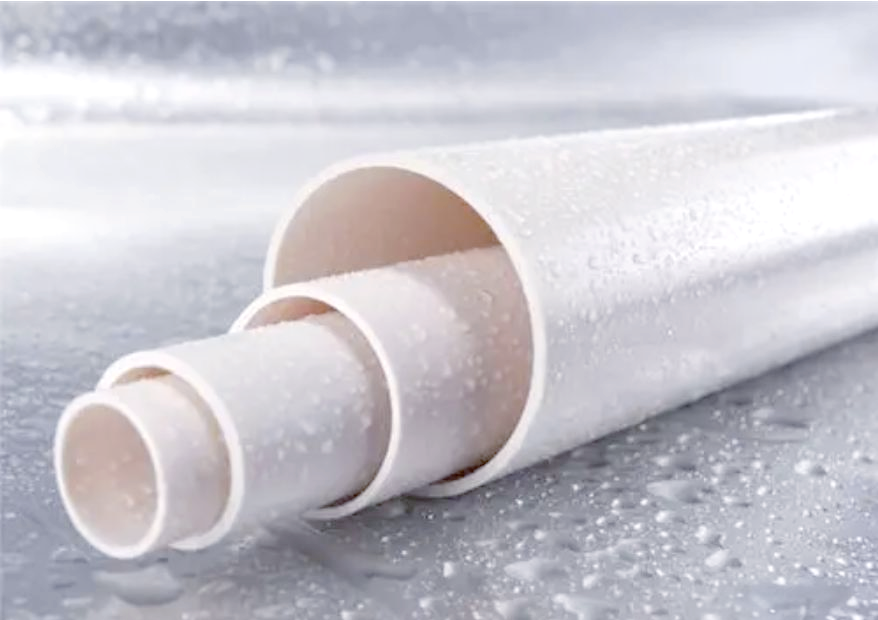 1. Core Standard Systems for PVC Pipes in North America
PVC pipe sizes in the North American market strictly adhere to two core standards. All compliant products must meet the corresponding specifications to obtain PVC pass certification, ensuring safe use and compatibility:
- ASTM D1785 Standard: Applicable to pressure pipes (e.g., water supply, industrial fluid transportation). Core specifications are based on Nominal Pipe Size (NPS), paired with wall thicknesses of different pressure classes (Schedule, abbreviated as Sch), with common series such as Sch 40 and Sch 80. It is the main basis for PVC pass certification in industrial scenarios.
- ASTM D2665 Standard: Targets Drain, Waste, and Vent (DWV) non-pressure pipes. Sizes are marked by actual Inside Diameter (ID). These pipes do not need to withstand high pressure, focusing on ensuring fluid circulation efficiency. They also need to pass PVC pass certification to enter the North American market.
These two standards cover most PVC pipe application scenarios. Their size specifications are the core basis for procurement selection and engineering design, as well as a key prerequisite for products to obtain PVC pass certification.
2. Detailed Explanation of Pressure Pipe (ASTM D1785) Standard Sizes
Pressure pipes are a core category in industrial procurement. Their sizes are identified by NPS (Nominal Pipe Size) as the core. For the same NPS specification, different Sch classes correspond to different wall thicknesses to meet varying pressure requirements. All specifications must pass PVC pass certification to ensure safe use under rated pressure:
(1) Common NPS Specifications and Key Parameters
| NPS Specification | Sch 40 Actual ID | Sch 40 Outside Diameter (OD) | Sch 80 Actual ID | Sch 80 Outside Diameter (OD) | Application Scenarios | |
| ½” | 10.29mm (0.405″) | 33.40mm (1.315″) | 8.56mm (0.337″) | 33.40mm (1.315″) | Small industrial equipment fluid transportation, household water purification pipelines | |
| ¾” | 12.70mm (0.500″) | 33.40mm (1.315″) | 10.92mm (0.430″) | 33.40mm (1.315″) | Building water supply branch pipes, small irrigation systems | |
| 1″ | 26.14mm (1.029″) | 33.40mm (1.315″) | 22.45mm (0.884″) | 33.40mm (1.315″) | Industrial compressed air pipelines, municipal water supply branch pipes | |
| 1¼” | 31.75mm (1.250″) | 42.16mm (1.650″) | 28.58mm (1.125″) | 42.16mm (1.650″) | Commercial building water supply pipelines, central air conditioning condensate transportation | |
| 1½” | 38.10mm (1.500″) | 48.26mm (1.900″) | 34.93mm (1.375″) | 48.26mm (1.900″) | Industrial cooling water pipes, large building water supply main pipes | |
| 2″ | 52.52mm (2.067″) | 63.50mm (2.500″) | 48.26mm (1.900″) | 63.50mm (2.500″) | Municipal water supply pipelines, sewage treatment plant transportation pipes | |
| 3″ | 80.96mm (3.187″) | 88.90mm (3.500″) | 75.95mm (3.000″) | 88.90mm (3.500″) | Industrial wastewater treatment pipelines, farmland irrigation main pipes | |
| 4″ | 102.26mm (4.026″) | 114.30mm (4.500″) | 95.25mm (3.750″) | 114.30mm (4.500″) | Urban water supply and drainage main pipes, industrial raw material transportation pipelines |
Note: For PVC pipes of the same NPS specification, the Outside Diameter (OD) is fixed, and only the wall thickness changes with the Sch class. This design facilitates the universal interchangeability of pipe fittings (e.g., joints, valves) and is a core requirement for size compatibility in PVC pass certification.
(2) Matching Principles Between Pressure Class and Size
When selecting pressure pipes, the appropriate Sch class size should be matched according to the actual working pressure:
- Sch 40: Suitable for low-pressure scenarios (working pressure ≤ 1.0MPa), such as building water supply and small industrial pipelines. It is the most cost-effective conventional choice, and most specifications can directly obtain basic PVC pass certification.
- Sch 80: Thicker wall thickness and stronger pressure-bearing capacity (working pressure ≤ 1.6MPa). Suitable for high-pressure industrial environments, underground buried pipelines, or corrosive fluid transportation. It requires special PVC pass certification for high-pressure scenarios.
- Special Scenarios: For ultra-high pressure requirements (e.g., industrial hydraulic systems), thick-walled specifications such as Sch 120 and Sch 160 can be selected. Their sizes must comply with the advanced ASTM D1785 standard, and PVC pass certification requirements are more stringent.
3. Drain/Waste/Vent (DWV) Pipe (ASTM D2665) Standard Sizes
DWV pipes focus on non-pressure scenarios. Sizes are marked by actual Inside Diameter (ID). They do not need to withstand high pressure, with the core goal of ensuring fluid circulation efficiency and anti-clogging performance. All compliant products must pass PVC pass certification for drainage scenarios:
Mainstream DWV Pipe Sizes and Applications
- 1¼” (Actual ID ≈ 31.75mm): Suitable for drainage of small sanitary fixtures (e.g., washbasins, urinals), commonly used in residential or small commercial buildings.
- 1½” (Actual ID ≈ 38.10mm): A mainstream specification for sanitary fixture drainage, compatible with washbasins, bathtubs, washing machines, etc. It is the core size of residential drainage systems.
- 2″ (Actual ID ≈ 50.80mm): Applicable to shower room and kitchen sink drainage, or as a collecting pipe for 1½” pipes, with stronger circulation capacity.
- 3″ (Actual ID ≈ 76.20mm): Mostly used for bathroom drainage main pipes and basement sewage pipes, capable of connecting multiple sanitary fixtures simultaneously.
- 4″ (Actual ID ≈ 101.60mm): Building drainage main pipes and septic tank connecting pipes, the main drainage size for residential and small-to-medium commercial buildings.
- 6″ (Actual ID ≈ 152.40mm): Drainage systems for large commercial buildings and industrial plants, or small municipal sewage branch pipes. Special large-diameter fittings are required.
The size selection of DWV pipes must follow the “flow matching” principle. Pipes with too small a diameter are prone to clogging, while those with too large a diameter cause material waste. Products meeting ASTM D2665 standards and passing PVC pass certification have strictly tested inner wall smoothness and diameter tolerance, effectively ensuring drainage efficiency.
4. Core Notes for PVC Pipe Size Selection
(1) Prioritize products with PVC pass certification: The North American market has strict requirements for the dimensional tolerance and wall thickness uniformity of PVC pipes. Products with PVC pass certification can ensure compliance with ASTM standards, avoiding installation difficulties or safety hazards due to inconsistent specifications.
(2) Determine the size system based on the scenario: For pressure scenarios (e.g., water supply, industrial transportation), select NPS + Sch specifications; for non-pressure scenarios (e.g., drainage, ventilation), choose DWV actual ID specifications. Avoid mixing systems to prevent incompatibility.
(3) Refer to fluid flow and pressure calculations: Select the appropriate pipe diameter based on fluid flow, pressure loss formulas, and actual working conditions. For example, large-flow industrial transportation should prioritize NPS 3″ and above specifications to ensure smooth fluid circulation.
(4) Match fitting sizes: PVC pipe fittings (joints, elbows, valves) must correspond to pipe sizes. Fittings of the same NPS specification can be used with pipes of different Sch classes, while DWV fittings need to match the corresponding actual ID models to avoid interface leakage.
(5) Pay attention to the installation environment: For underground or outdoor pipes, select Sch 80 and above specifications with thicker walls. Meanwhile, confirm that the product has passed PVC pass weather resistance certification for outdoor scenarios to extend service life.
5. Conclusion
The standard sizes of PVC pipes are the core basis for engineering selection and procurement decisions. Both the NPS + Sch system for pressure pipes and the actual ID specifications for DWV pipes must strictly follow ASTM standards and pass PVC pass certification to meet the usage requirements of the North American market. For B2B purchasers, clarifying their application scenarios (pressure/non-pressure), fluid parameters (flow/pressure), and selecting compliant certified products are key to ensuring project quality and reducing maintenance costs. It is recommended to confirm the product’s PVC pass certification qualification and size test report before procurement, ensuring that the selected specifications accurately match actual needs and providing reliable support for the smooth progress of the project.
Post time: Dec-08-2025
