In municipal engineering, building water supply and drainage, industrial fluid transportation, agricultural irrigation, and underground pipeline projects, PE, PVC, and PPR pipes are the three most widely used plastic pipes. Although all offer corrosion resistance, light weight, and long service life, their material properties, pressure ratings, application scenarios, and installation methods vary greatly. Choosing the wrong pipe can increase costs, cause leaks, deformation, or bursts. As a professional engineering pipe manufacturer, we compare PE, PVC, and PPR pipes from performance, application, pressure, temperature, construction, and cost to help you select the best pipe for your project.
1.PE Pipe – High Flexibility & Anti-Settlement, Best for Underground Projects
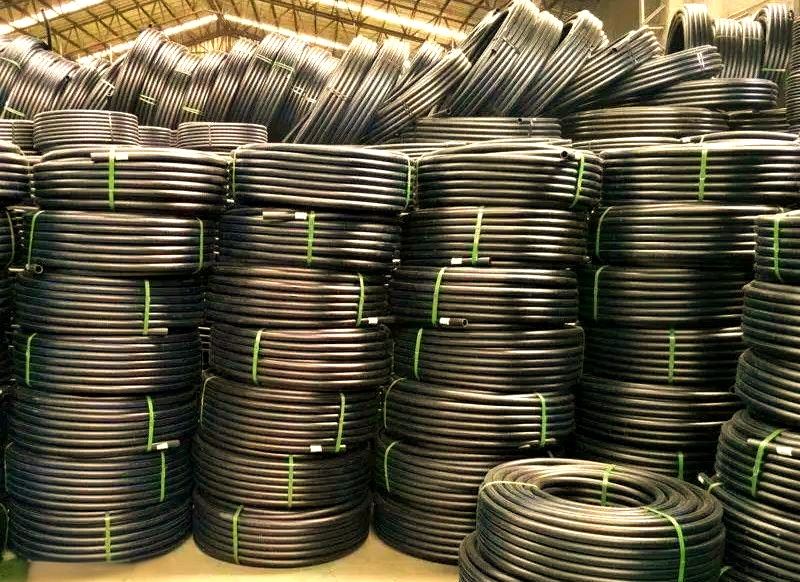
PE pipe (high-density polyethylene) features excellent flexibility, impact resistance, low-temperature resistance, and strong anti-settlement performance. It is the top choice for municipal underground water supply, sewage treatment, agricultural irrigation, and rainwater collection.PE pipes can be connected by hot melt butt welding, with joint strength close to the pipe itself, ideal for long-distance laying. Large-diameter PE pipes have high external pressure resistance (stiffness SN8–SN16), perfect for underground networks, road drainage, and main park pipelines.Advantages: High toughness, crack-resistant, anti-settlement, bendable for construction.Disadvantages: Average rigidity, not for high temperatures, needs UV protection for outdoor use.Best for: Municipal water supply, underground drainage, long-distance water transmission, trenchless projects, agricultural irrigation.
2.PVC Pipe – High Rigidity & Low Cost, Ideal for Building Drainage
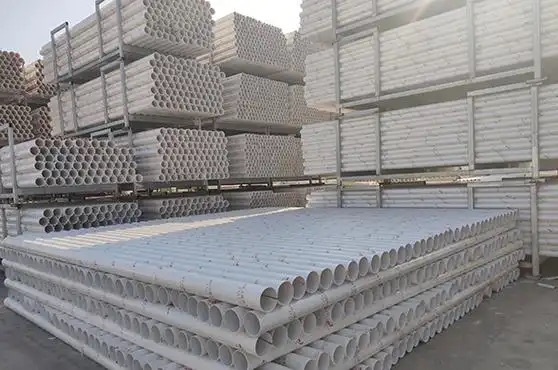
PVC pipe (rigid polyvinyl chloride) is hard, low-cost, and dimensionally stable — the most economical engineering pipe worldwide.UPVC drainage pipes have smooth inner walls and low flow resistance, widely used in building drainage, rainwater pipes, temporary construction water supply, and electrical conduits. PVC pressure pipes are suitable for low-pressure water supply and garden irrigation.Advantages: Low cost, high rigidity, easy to cut and install.Disadvantages: Poor heat resistance, brittle in low temperatures, not for hot water.Best for: Building drainage, rainwater systems, garden irrigation, low-pressure drainage, electrical conduits.
3.PPR Pipe – Heat Resistant & Hygienic, Perfect for Hot & Cold Water Systems
PPR pipe (random copolymer polypropylene) is hygienic, non-toxic, heat-resistant, and provides zero-leakage hot-melt connections. It is the standard for building hot/cold water, drinking water, central heating, and HVAC systems.PPR pipes work continuously at 70°C and withstand up to 95°C temporarily, ideal for residential, hotel, hospital, and commercial hot water systems.Advantages: Hygienic, heat-resistant, strong sealing, 50-year service life.Disadvantages: Less flexible than PE, not suitable for heavy buried loads.Best for: Building water supply, drinking water systems, hotels, hospitals, heating projects.
4. Core Comparison: PE vs PVC vs PPR Pipes
- Temperature Resistance: PPR > PVC > PE
- Flexibility: PE > PPR > PVC
- Rigidity: PVC > PPR > PE
- Pressure Rating: PE > PPR > PVC
- Hot Water Suitable: Only PPR
- Underground Anti-Settlement: PE Best
- Cost: PVC (lowest) < PPR < PE (large diameter)
5.How to Choose the Right Pipe for Your Project?
- Underground / long-distance / sewage projects → PE Pipe
- Building drainage / low-cost projects → PVC Pipe
- Hot & cold water / drinking water → PPR Pipe
- Industrial high-temperature fluid → PPR Pipe
- Irrigation / rainwater → PE or PVC Pipe
6.Conclusion
PE, PVC, and PPR pipes each have unique advantages. PE excels in underground projects, PVC dominates low-cost drainage, and PPR is the best for hot and cold water systems. For engineering buyers, choosing based on usage, temperature, pressure, and installation environment ensures safety, stability, and cost efficiency.As a direct factory, we supply full-series PE, PVC, and PPR pipes with custom sizes and fast delivery to support reliable pipeline solutions for all engineering projects.
Post time: Feb-19-2026
