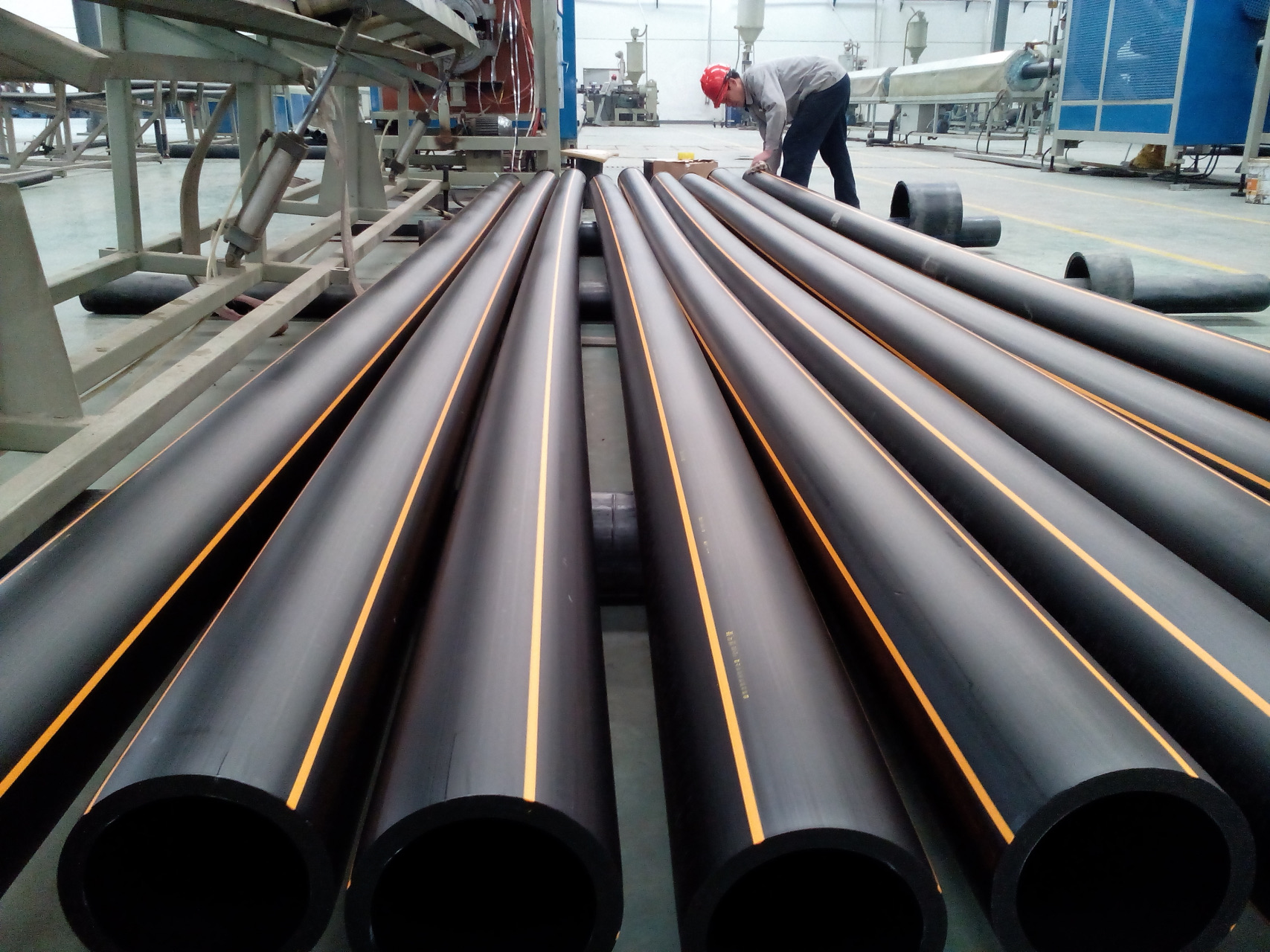
1.Core Challenges of Pipes in Frigid Environments
In extremely cold regions (-20℃ to -40℃), ordinary plastic pipes are prone to brittle cracking, frost heaving, and leakage, directly affecting project safety and service life. Low temperatures harden resin molecular chains and reduce toughness. Traditional PVC and regular PE pipes crack easily in severe cold, so pipe selection must focus on low-temperature resistance, frost crack resistance, high toughness, and anti-aging properties.
2.Top Choice for Extremely Cold Areas: Cold-Resistant PE Pipes
Cold-resistant PE pipes (HDPE/PE100) are the best choice for frigid environments. PE material has excellent low-temperature toughness, and specially formulated cold-resistant grades remain flexible at -40℃ without embrittlement or cracking. They adapt to frozen soil settlement and low-temperature shrinkage, ideal for buried water supply, gas, agricultural irrigation, and municipal engineering.
Compared with other pipes, cold-resistant PE pipes offer high impact resistance and stable hot-melt connections, making them widely used in Russia, Northern Europe, Northeast and Northwest China.
3.PPR Pipes: Only for Indoor Cold Environments
PPR pipes have limited low-temperature resistance and become brittle below -10℃. Not recommended for outdoor, buried, or extremely cold scenarios—only suitable for indoor hot and cold water systems with insulation.
4. PVC Pipes: Strictly Prohibited in Extremely Cold Weather
PVC pipes are rigid but brittle at low temperatures and crack easily below 0℃. Not suitable for outdoor, buried, or water supply in cold regions—only for drainage and wiring in warm environments.
5.5 Key Indicators for Cold-Weather Pipe Selection
1. Low-temperature rating: Choose pipes certified for -20℃, -30℃, or -40℃.
2. Raw material quality: 100% virgin PE resin, no recycled material.
3. Frost and crack resistance: Check impact test and low-temperature bending reports.
4. Weather and UV resistance: Outdoor pipes need cold-resistant UV masterbatch.
5. Connection reliability: Hot-melt welding preferred over adhesive bonding.
6. Masterbatch Impact on Cold-Weather Pipe Durability
Pipes for extreme cold require special cold-resistant and weather-resistant masterbatch. Ordinary masterbatch causes cracking and fading at low temperatures. High-performance cold-resistant masterbatch improves compatibility and extends service life.
7.Installation & Usage Tips
- Bury pipes below the frost line
- Add insulation for outdoor pipelines
- Avoid harsh installation in low temperatures
- Source from factories with cold-resistant test reports
Conclusion
For extremely cold weather, cold-resistant PE pipes are the only reliable option. Prioritize low-temperature resistance, toughness, frost resistance, and weatherability with professional masterbatch to ensure long-term safe operation. Scientific selection prevents cracking and reduces maintenance costs.
AQ: Pipe Selection for Extremely Cold Weather
Q1: Which pipe material is best for -40°C extreme cold environments?
A1: Cold-resistant HDPE/PE100 pipes are the best choice. They maintain high flexibility and toughness at -40°C, resist brittle cracking, and adapt to frozen soil movement. PPR and PVC are not suitable for outdoor or buried use in extreme cold.
Q2: Why do PVC pipes crack easily in cold weather?
A2: PVC has poor low-temperature toughness. It becomes hard and brittle below 0°C, and is prone to cracking under impact or pressure. PVC is only recommended for indoor drainage in warm areas, not for cold-region water supply or outdoor use.
Q3: Can PPR pipes be used in cold outdoor projects?
A3: No. PPR pipes start to embrittle below -10°C. They are only safe for indoor hot and cold water systems with insulation. Outdoor or buried use in cold areas carries a high risk of cracking and leakage.
Q4: What certifications should I check for cold-resistant pipes?
A4: Look for low-temperature impact test reports, frost resistance certification, and virgin raw material guarantees. Professional factories also provide UV resistance and masterbatch compatibility reports for long-term outdoor use.
Q5: How does masterbatch affect pipe performance in cold weather?
A5: Special cold-resistant masterbatch improves low-temperature compatibility and weatherability. Ordinary masterbatch causes pigment migration and brittleness in cold conditions, while high-quality masterbatch enhances crack resistance and extends service life.
Q6: What installation tips prevent pipe freezing and cracking?
A6: Bury pipes below the frost line, add insulation layers for outdoor pipelines, use hot-melt connections instead of glue, and avoid violent construction in low temperatures.
Post time: Mar-18-2026
