The stability of a water supply and drainage system depends 70% on the pipes and 30% on the connection techniques. Unreasonable connection methods will not only lead to hidden dangers such as leakage and pipe bursts but also significantly increase later operation and maintenance costs. As a source factory with years of experience in pipe production, this article analyzes the applicable scenarios, operation key points, advantages, and disadvantages of three mainstream techniques—hot melt connection, adhesive connection, and mechanical connection—based on engineering practices, providing a reference for the construction selection of municipal and building projects.
I. Hot Melt Connection: A “Seamless Welding” Solution for Plastic Pipes
Hot melt connection is an exclusive connection process for thermoplastic pipes such as PPR and HDPE. Its core principle is to heat the ends of pipes and fittings to a molten state using high temperature, then press them together for bonding. After cooling, an integrated structure with the same strength as the pipe itself is formed.
This process is divided into two types: hot melt butt welding and hot melt socket welding. Hot melt butt welding is suitable for large-diameter HDPE municipal water supply and drainage pipes with DN≥90mm, featuring high connection strength and strong resistance to geological settlement. Hot melt socket welding is mostly used for indoor PPR water supply pipes with DN≤63mm, offering simple and quick operation.
Advantages: Excellent connection tightness, high pressure resistance, aging resistance, no leakage risk, and service life consistent with that of the pipes; no additional sealing materials required, and no consumable loss during long-term use.Disadvantages: High requirements for construction equipment and operation accuracy. The three parameters of temperature, time, and pressure must be strictly controlled, otherwise over-melting deformation or incomplete welding is prone to occur; it is greatly affected by ambient temperature, and the cooling time needs to be extended for low-temperature construction.Applicable Scenarios: Food-grade drinking water transportation, municipal underground long-distance water supply networks, and hot water systems in high-rise buildings.
II. Adhesive Connection: A Low-Cost and Efficient Solution for UPVC Pipes
Adhesive connection is the mainstream connection method for UPVC drainage pipes. It dissolves the surface of the interface between pipes and fittings using special solvent-based glue, and a firm adhesive layer is formed after curing to achieve sealed connection.
During construction, the interface must first be sanded to be rough, cleaned and dried, then evenly coated with glue. After insertion, let it stand for 10-15 minutes for initial curing, and the optimal strength will be achieved after 24 hours.
Advantages: Low cost, low operation threshold, no need for professional heavy equipment, suitable for the rapid construction of small and medium-diameter UPVC drainage pipes; high construction efficiency, which can meet the construction period requirements of large-scale residential drainage projects.Disadvantages: The connection strength depends on the glue quality and construction technology, unable to withstand high pressure, only suitable for non-pressure drainage scenarios; the glue has certain corrosivity and volatility, and ventilation protection must be done during construction; the adhesive layer is prone to aging in high-temperature environments, leading to leakage.Applicable Scenarios: Indoor building drainage, rainwater collection systems, and low-pressure farmland irrigation networks.
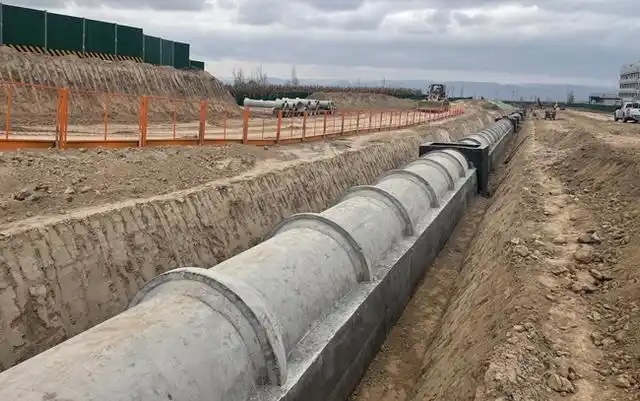
III. Mechanical Connection: A Flexible Adaptation Solution for Metal and Composite Pipes
Mechanical connection is a universal connection method for pipes such as ductile iron pipes, stainless steel pipes, and steel-plastic composite pipes. Common types include flange connection, clamp connection, and threaded connection, which are mainly achieved by pressing the seal with mechanical external force to realize fixation and sealing.
Flange connection is suitable for connecting large-diameter pipes with valves, water pumps and other equipment, featuring convenient disassembly and strong tightness; clamp connection does not require welding, suitable for emergency repair scenarios such as fire water supply and municipal sewage discharge; threaded connection is mostly used for small-diameter metal water supply pipes with flexible installation.
Advantages: Strong versatility, suitable for most metal and composite pipes; construction is less restricted by the environment and can be operated under complex working conditions such as humidity and low temperature; convenient later maintenance, facilitating pipe disassembly, inspection, and transformation.Disadvantages: It relies on consumables such as sealing rubber rings and thread seal tape, which have the risk of aging and failure during long-term use; the cost of flange and clamp accessories is relatively high, and auxiliary lifting equipment is required for the construction of large-diameter pipes.Applicable Scenarios: Municipal high-pressure water supply networks, industrial chemical fluid transportation, and building fire protection systems.
IV. Comparison Table of Core Parameters of Three Connection Techniques
|
Connection Technique |
Core Advantages |
Main Disadvantages |
Suitable Pipes |
Applicable Scenarios |
| Hot Melt Connection | High connection strength, no leakage, high pressure resistance | High equipment requirements, greatly affected by temperature | PPR, HDPE | Drinking water, hot water, municipal long-distance water supply |
| Adhesive Connection | Low cost, high efficiency, simple operation | Non-pressure-resistant, adhesive layer prone to aging | UPVC | Indoor drainage, rainwater collection |
| Mechanical Connection | Strong versatility, convenient maintenance, few working condition restrictions | Consumables prone to aging, high accessory cost | Ductile iron pipes, stainless steel pipes, steel-plastic composite pipes | High-pressure water supply, industrial fluid, fire protection systems |
Conclusion
The selection of pipe connection techniques for water supply and drainage engineering should follow the principle of “matching materials with techniques and adapting to scenarios”: hot melt connection is preferred for plastic water supply pipes, adhesive connection is preferred for drainage UPVC pipes, and mechanical connection is suitable for metal and composite pipes. As a source pipe manufacturer, we not only provide high-quality pipes that meet national and international certifications but also offer targeted connection technique guidance to help engineering projects reduce costs and increase efficiency.
Post time: Jan-13-2026
